
As a business owner, there’s nothing more frustrating than clients not getting back to me after showing initial interest in my services. This common occurrence can leave you puzzled and questioning what went wrong. Whether it’s a lead from your website or a prospect who seemed eager during your last conversation, the silence that follows can feel like a void. But don’t despair—this situation is more common than you might think, and there are actionable steps you can take to reduce the frequency of ghosting. In this article, we’ll delve into the reasons why prospects might ghost you and how to leverage automation, specifically with Make.com workflows, to improve your communication strategy and increase response rates. By understanding the potential barriers and implementing the right solutions, you can turn missed connections into valuable engagements.
Table of Contents
Understanding Why Clients Ghost You
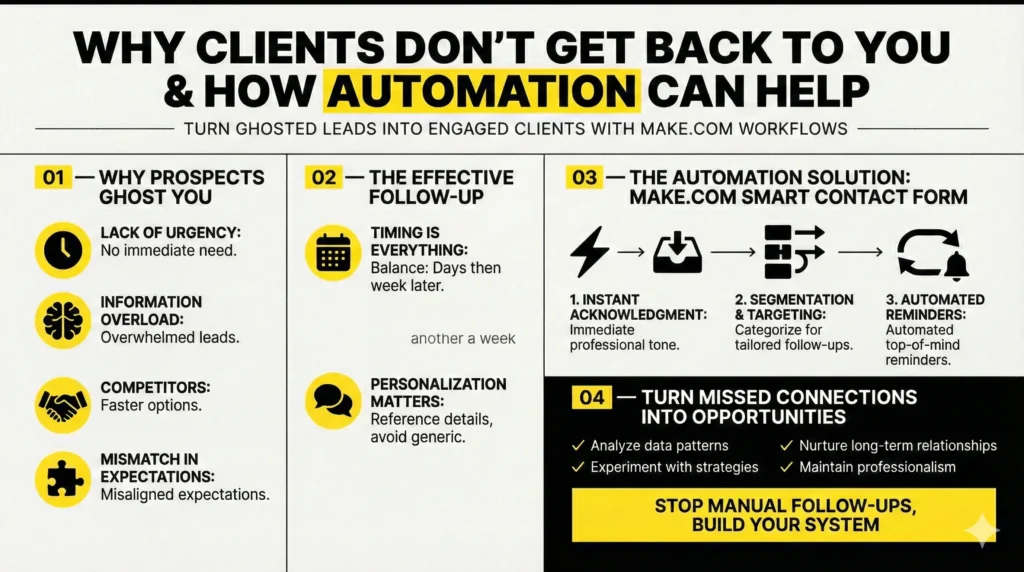
Before we jump into solutions, it’s crucial to understand why clients not getting back to me happens in the first place. Prospects might disappear for a variety of reasons, and identifying these can help you tailor your approach. The first reason could be a lack of urgency. Often, prospects inquire about services out of curiosity or future planning, without a pressing need to take immediate action. As time passes, the urgency diminishes, and so does their interest in following up.
Another reason could be information overload. Prospects might be overwhelmed with too much information during your communication, leading to confusion. When faced with complex choices or too many details, people tend to postpone decisions. They might mean to come back to your offer but get sidetracked by other tasks.
Additionally, clients not getting back to me may result from competitors. In a competitive market, your prospects are likely contacting multiple service providers. While you may feel confident in your offerings, if a competitor provides a more compelling or faster response, your lead might go with them instead.
Finally, there could be a mismatch in expectations. If your initial communication doesn’t clearly match what the prospect was expecting, they might simply lose interest. This highlights the importance of setting accurate expectations from the onset.
The Role of Effective Follow-Up
Once we understand the reasons behind clients not getting back to me, the next step is to enhance your follow-up strategy. Follow-ups are critical in reminding prospects about your value proposition and keeping you top-of-mind. However, the key is to follow up effectively without being intrusive.
Timing is everything. Striking a balance between being persistent and annoying is crucial. A well-timed follow-up shows professionalism and eagerness to assist without being overbearing. An effective strategy is to send a follow-up email within a few days of your initial contact, followed by a subsequent email a week later if no response is received.
Personalization can significantly impact follow-up success rates. A generic follow-up can easily be ignored, but a personalized message that references specific points from your initial conversation can rekindle interest. It shows that you value their specific needs and are attentive to detail.
Automation can be an ally here. Through Make.com’s workflow like the Smart Contact Form, you can set up automated follow-ups that are triggered by certain actions or time delays. It ensures timely communication without the risk of human error or delay, thereby improving your chances of getting a response.
Leveraging Automation to Improve Communication
Automation is not just about saving time; it’s a strategic tool to address the issue of clients not getting back to me. By incorporating automation, you can create a seamless communication flow that makes it easier for prospects to re-engage. The Make.com workflow, Smart Contact Form, is designed specifically for this purpose.
This workflow can automate the initial response to inquiries, ensuring that potential clients receive immediate acknowledgment of their interest. An instant response sets a professional tone and keeps the line of communication open. Additionally, it provides you with the opportunity to share valuable information or next steps without delay.
Beyond initial responses, automation can help in segmenting prospects based on their level of interaction. By using data from your communication, you can categorize leads into different buckets and tailor your follow-up efforts accordingly. This targeted approach makes your follow-up more relevant and increases the likelihood of re-engagement.
Automating reminders and updates about your services or any promotions can also be beneficial. By keeping your brand in their line of sight, you increase the chance of staying in their consideration set when they decide to move forward.
Transforming Missed Connections into Opportunities
While clients not getting back to me can be discouraging, each missed connection is also an opportunity to refine your approach and improve your systems. Start by analyzing the data from your automated workflows to understand patterns in client interactions. This data-driven insight can reveal which elements of your communication are most effective and where prospects tend to drop off.
Once these patterns are identified, you can experiment with different strategies. For instance, tweaking the content or timing of your automated messages might yield better results. Additionally, consider incorporating feedback mechanisms in your communication flow to gather insights directly from prospects who did re-engage.
Another effective approach is to nurture long-term relationships with prospects who didn’t convert immediately. Keep them engaged with valuable content or occasional updates about your services. Even if they don’t need your services now, they might in the future, and your consistent communication keeps you at the forefront of their mind.
Lastly, remember that not every inquiry will lead to a conversion, and that’s okay. By maintaining a positive and professional communication strategy, you build a reputation that could lead to referrals or future engagements.
Conclusion
Dealing with clients not getting back to me is a common challenge for business owners, but it doesn’t have to be a permanent roadblock. By understanding the reasons behind prospect ghosting and leveraging tools like Make.com’s Smart Contact Form, you can enhance your communication strategy to encourage re-engagement. Automation provides the consistency and personalization necessary to stand out in a crowded market, improving your chances of converting inquiries into clients. Ultimately, the key lies in persistence, personalization, and a willingness to adapt your approach based on insights and feedback. With these strategies, you can turn silent prospects into active clients, transforming missed opportunities into business growth.


Susana Toth
Make.com Certified Expert & Founder, La Maquina Studio
Susana Toth is a Make.com Certified Expert and the founder of La Maquina Studio, where she helps small businesses and consultants eliminate repetitive work through smart automation. With 20+ years of experience in web design, business consulting, and digital strategy, she builds practical AI-powered workflows that save hours every week — without writing a single line of code. She writes about Make.com automation, AI integration, and building systems that work while you don’t.
Learn more about me →